

Carnegie Hall Master Plan Complete
Helpern Architects recently delivered a Master Plan to Carnegie Hall intended to reimagine the illustrious venue’s front-of-house public spaces, supporting its three performance venues.
Carnegie Hall originally engaged Helpern to create this study in 2018, looking at public spaces last renovated between 20 and 40 years ago with a focus on greater accessibility and improved patron amenities. The plan does not contemplate changing the interiors of Carnegie Hall’s three legendary halls stylistically or acoustically, but the electrical, mechanical, and plumbing systems that serve those venues are part of the study.
Work on the plan was interrupted by the COVID pandemic. Post-COVID, its scope subsequently expanded to contemplate further backstage and office reconfiguration and expansion in further support of Carnegie Hall’s programming.
In his charge to the master planners, Clive Gillinson, Carnegie Hall’s Executive and Artistic Director for nearly 20 years, remarked that “At the Hall, architecture and mission are completely linked. As an institution, Carnegie Hall is always looking to preserve the best of the past while embracing the needs of the future. We would value a fresh look through that lens as we reconsider the contemporary needs of our concert-going public.”
“Carnegie Hall was created at the height of Gilded Age glamour,” Helpern explains. “This plan highlights the grandeur of the 1890s while improving accessibility and amenities, and sensitively inserting advanced technologies of the 21st century.”
Further reflecting on the master planning process, Helpern adds, “We’ve reconceived many historic buildings but rarely one as significant as Carnegie Hall. It pleases me that this grand structure – renovated many times in the past – remains historically significant yet has the resilience to evolve to meet contemporary needs and continue to uplift artists and audiences alike.”
David Helpern, FAIA led the Master Plan’s design team, managed by Helpern Architect’s Associate Don Lasker. Design and production were under Slavica Nikolic of Ronnette Riley Architect.
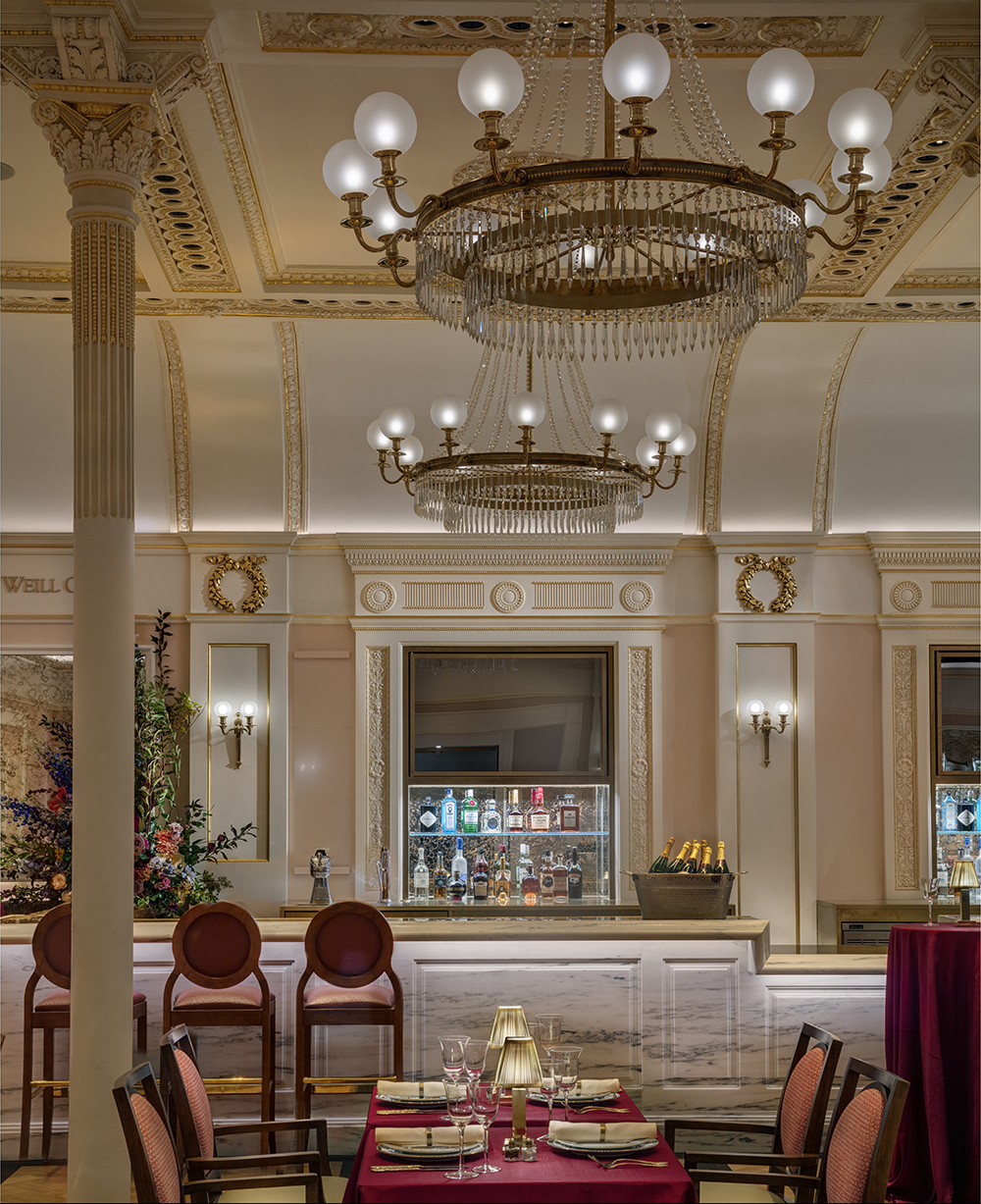
While it remains to be seen if the full Master Plan will be realized, Carnegie Hall took advantage of COVID, when the Hall was dark, to advance one space—the original “small dining room” as it was called in 1891, reconceived and renamed the Joan and Sanford I. Weill Café —which now serves as a daytime café, pre-concert dining room, and intermission bar area. Its total reconstruction from below the floor to above the ceiling was a chance to explore design possibilities, materials, finishes, fabrics, and technologies.
“Have an entr’acte snack and look around,” Helpern suggests; “You may glimpse the potential for Carnegie Hall’s future, which promises to be even greater than its past.”